
Himalayan Food: What It Is, Why It Matters, and How to Cook It
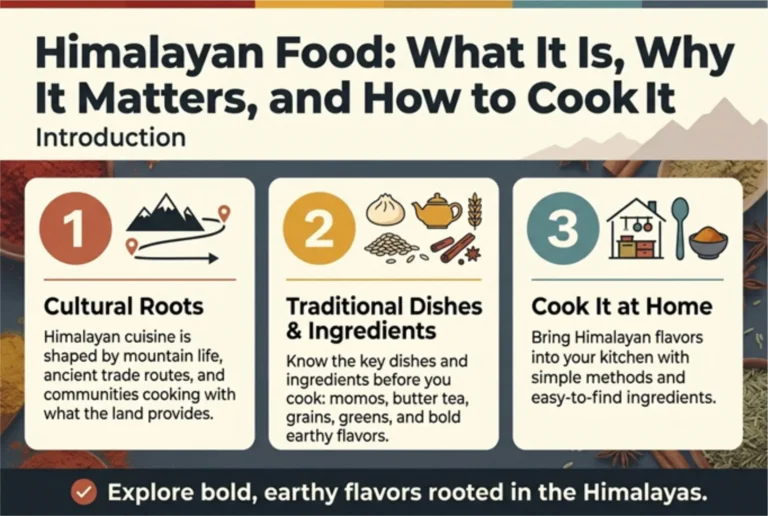
If you’ve ever been curious about Himalayan food, you’re in the right place. This guide is for home cooks, food lovers, and anyone who wants to explore bold, earthy flavors rooted in one of the world’s most fascinating regions.
Himalayan cuisine is more than just momos and butter tea — it’s a reflection of mountain life, ancient trade routes, and communities that learned to cook with what the land gave them.
Here’s what we’ll cover:
The cultural roots behind Himalayan cooking and what shapes its unique identity
Traditional dishes and key ingredients you need to know before you start cooking
- Simple ways to bring Himalayan flavors into your kitchen without tracking down hard-to-find ingredients
By the end, you’ll have a solid feel for this cuisine and a few ideas to get started at home.
How Geography Shapes Unique Himalayan Flavors
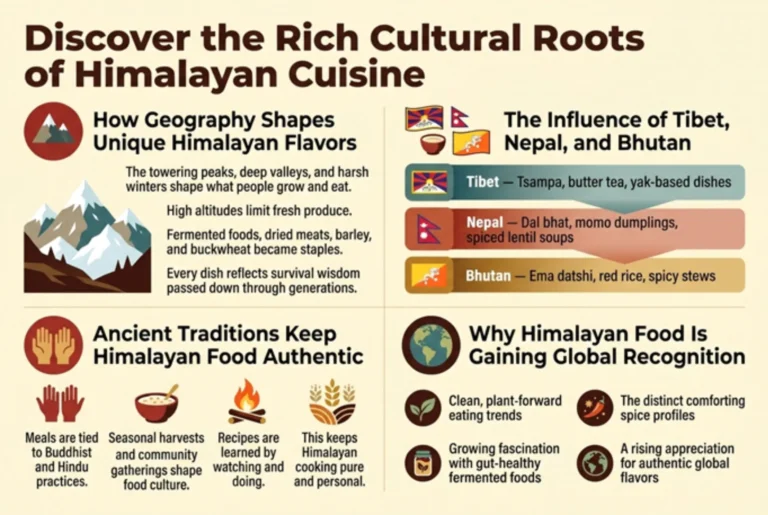
Those towering Himalayan peaks and valleys, and the harsh winters they bring, have a really profound impact on what people can grow and eat. It’s a pretty simple fact of life up there: due to the high altitudes, you can’t grow much fresh produce, so people rely on all the usual staples: fermented foods, dried meats, and stuff like barley and buckwheat to get by on a daily basis. In short, every single dish has its roots in some seriously well-honed survival know-how that’s been passed down from one generation to the next.
The Influence of Tibet, Nepal and Bhutan on Regional Dishes
A Region by Region Breakdown
What Each Region Brings to the Table
Tibet
Tsampa – that iconic roasted barley, butter tea, and all the delicious yak-based dishes that go with it
Nepal
Dal bhat – a super traditional mix of lentils and rice, those awesome little dumplings called momos, and some seriously tasty spiced lentil soups
Bhutan
Ema datshi – a fiery chile cheese dish that’ll blow your head off, red rice, and some seriously spicy stews that are guaranteed to keep you warm
What’s really cool is that these three cultures blend together in a way that makes their cuisine both uniquely diverse and, at the same time, deeply connected.
Ancient Traditions Keep Himalayan Food Tastebuds Authentic
Himalayan cooking is rooted deep in tradition – you often see meals tied to Buddhist and Hindu practices, seasonal harvests, and community gatherings. And one of the really interesting things about Himalayan cooking is that recipes are almost never written down – theyre just learned through watching and doing it yourself, which is what keeps them feeling so pure and personal.
Why Himalayan Food is Starting to Get Real Global Recognition
People are getting really excited about the clean, plant-forward eating they hear about in Himalayan cuisine
The unique fermented ingredients are really attracting a whole new crowd of fans – people who are really into gut health stuff
The bold yet balanced flavours are luring adventurous foodies in droves
And with the growth of Himalayan diaspora communities around the world, more and more authentic recipes are getting shared
Momos: The Best Himalayan Dumplings
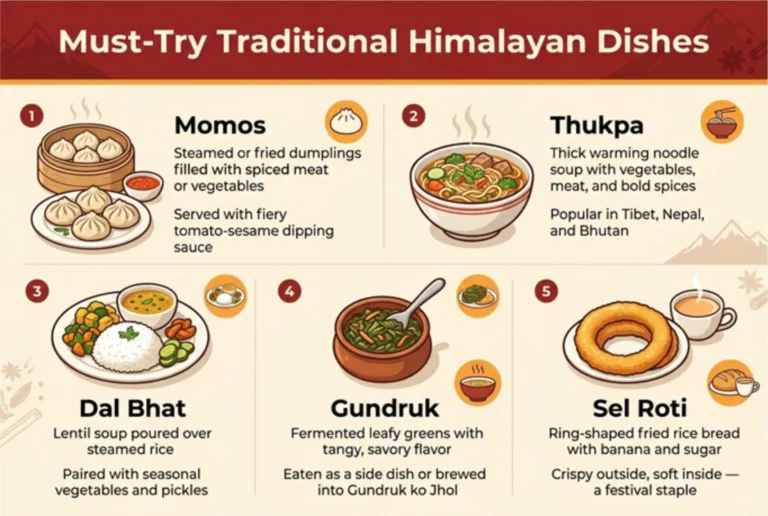
Whether steamed or pan-fried, filled with meat or vegetable filling, momos are the best Himalayan dumplings served hot with spicy tomato-seed dipping sauce.
Thukpa: The Best Noodle Soup for Winter
This delicious thick noodle soup which is full of veggies, meat, and spices has its origin in Tibet but it has been adopted by Nepalese and Bhutanese people and it is exactly the food you should try on cold winter days.
Dal Bhat: The Staple Food of Himalaya
Dal Bhat is the most common food item of Himalayan cuisine including Dal soup poured over steamed rice, vegetables, and pickles. This food is simple but highly delicious and almost all the locals eat it twice a day without ever getting bored with it.
Gundruk: Fermented Leafy Greens
The preparation process of this food includes fermentation of green leafy vegetables like mustard or spinach. The food tastes tangy and slightly sour making it an ideal food to be used as side dish or Gundruk ko Jhol.
Sel Roti: The Unique Rice Donut You Should Try
Sel Roti is a unique ring-shaped bread which is made of batter of rice and bananas and sweetened with sugar.
Key Ingredients That Define Himalayan Cooking
Buckwheat and Barley: The Main Staples of Mountainous Regions
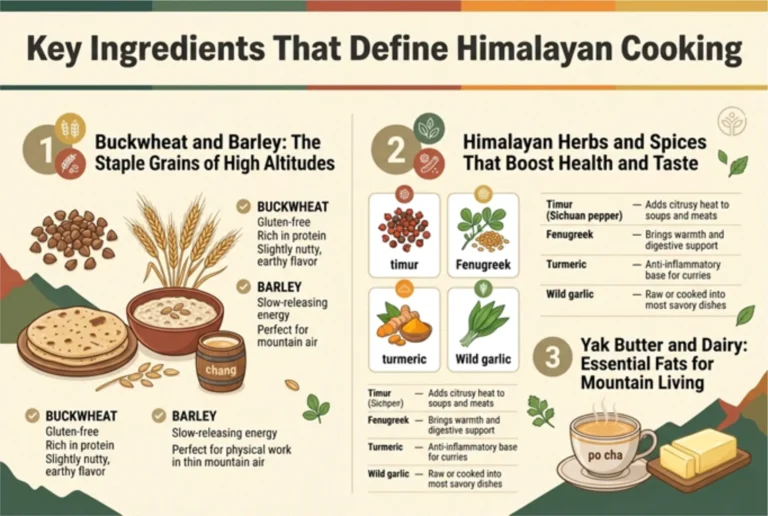
In areas where neither wheat nor rice can survive, buckwheat and barley play the major role in the cooking of the Himalayas. These grains withstand harsh conditions and are used to make flatbreads, porridges, even chang (beer made of barley).
Buckwheat is free of gluten, high in protein, and has an earthy taste
Barley supplies slow-energy releasing – ideal for hard physical labor in mountains
Yak Butter and Dairy Products: Fats for Surviving at Mountains
Yak butter is calorie-rich, high in omega fatty acids, and vital for surviving the harsh winters. It is used to prepare the traditional butter tea (po cha), cooking, and preserving food. Yak milk cheese (chhurpi) is another important food product; hard, lasting, and high in proteins.
Remarkable Health Benefits of Himalayan Food
How Fermented Food Items Boost Gut Microbiota and Immunity
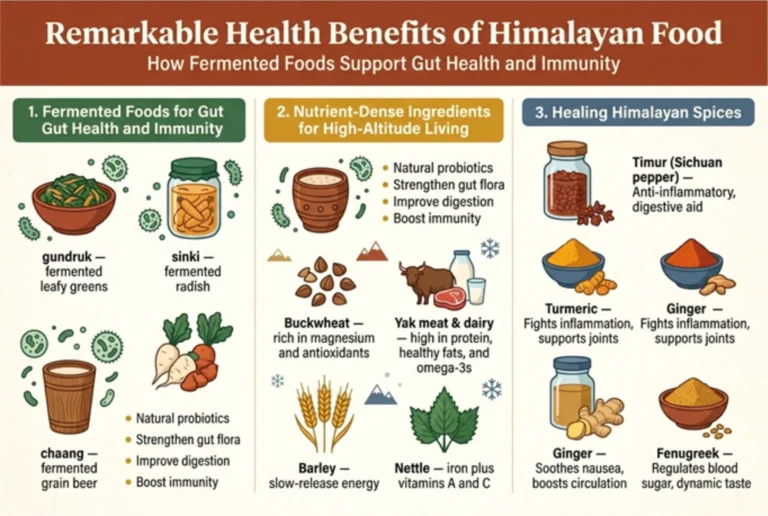
The Himalayan diet comprises many fermented foods such as gundruk (fermented green vegetables), sinki (fermented radish), and chaang (fermented beer from grains). Such food items include plenty of probiotics that promote good gut microbiota and boost immunity.
Food Items Rich in Nutrients to Adapt to the Altitude
Life at an altitude of 3,000 meters above sea level requires a lot of nutrition. The following food items fulfill this purpose:
Buckwheat – containing magnesium and antioxidants
Yak meat and products – rich in protein, fats, and omega-3s
Barley – contains slow-releasing energy, ideal for cold environments
Nettle – rich in iron, vitamins A and C
Why Himalayan Diets Enhance Longevity and Energy Levels
People living in the Himalayan region are found to have low incidences of chronic diseases. This is because their diet consists of unprocessed food and fermented vegetables, providing them energy through whole grains and plant proteins.
How to Bring Himalayan Flavors Into Your Own Kitchen
Readily Available Himalayan Staples from Grocery and Online Shops
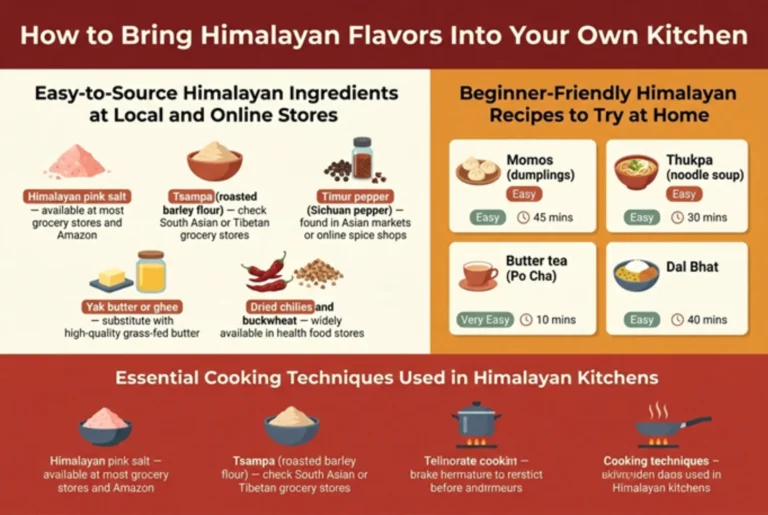
All these Himalayan foods are readily available:
Himalayan pink salt – sold at nearly all grocery shops and Amazon
- Tsampa (barley flour) – search for it in South Asian or Tibetan grocery shops
- Timur pepper (also known as Sichuan pepper) – available at Asian food markets and online spice shops
- Yak butter or ghee – substitute them with high quality grass-fed butter
- Dried chilies and buckwheat – found at all health food shops
Main Cooking Methods Employed in Himalayan Cuisine
- Steaming – the standard technique for momos and bread
- Slow simmering – creates flavor in stews and soups
- Stone grinding – preparation of spice paste; you can use a blender
- Open flame roasting – provides smoky taste to grains and vegetables